How a groundbreaking curriculum unpacks Chassidus to build the emotional health of our children.
An Interview with Mrs. Henny (Lipsker) Bartfield, graduated 1988
Interviewed by Mrs. Chanah (Poltorak) Rose, graduated 2005
At Menachem Education Foundation, we often ask parents and teachers what their hopes and dreams are for their children and students. The most frequent responses we hear are, “Today’s children need to learn Derech Eretz, ” and, “We need to teach emotional health and resilience.” Although these sound like two different goals, they are really layers of the same core mission: raising healthy Yidden and Chassidim. To bring this vision to life, MEF set out to create Project TOMiM.
Project TOMiM can be described as a social-emotional curriculum, for grades 3-6. In truth it is a Chassidus curriculum that tackles the questions of who we are and how to actualize our potential in our thoughts, feelings and actions. Using colorful visuals, animated stories, stickers, journal prompts, cards, games, and more, children are led experientially through the deepest concepts of Chassidus and are guided to internalize and apply them to their lives. In schools that have implemented the program, teachers are already reporting calmer classrooms, more confident students, and children eagerly using TOMiM tools on their own.
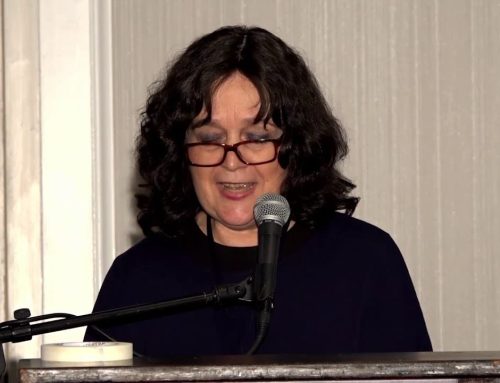
Mrs. Henny Bartfield, a veteran and beloved educator, is the author and creative director of Project TOMiM. For five years, she has toiled to unpack Chassidus in language and experiences that children can understand and relate to. Today, Project TOMiM has been taught in 21 schools, and counting. We sat down with Henny to reflect on her journey with this program, her insights into Chinuch today, and what every parent or educator can take away from Project TOMiM.
Can you walk us through the curriculum so we get a sense as to what the kids are learning?
When we were deciding what to call this program, Rabbi Yossi Zeidman, a Project TOMiM teacher in the pilot phase, suggested TOMiM as an acronym for Transforming Our Mind and Middos, and that’s essentially what this program aims to do.
We use the metaphor of a train with four cars, and each car is another unit in the curriculum. The first car, the conductor’s car, is the Neshama. There we discuss our identity, and empower students that they can proactively steer their TOMiM train in the right direction!
The second car is Sechel, which discusses the power of thought. Children learn that they can resist automatic negative thoughts that pop up, and proactively direct their thinking through the 12 Pesukim and other Torah thoughts. The third car is Middos, our emotions. This unit gives children tools for self-regulation, to notice when emotions are escalating, to slow the train down and bring their emotion-car back on track. We also explore core emotions like happiness, sadness, fear, and anger through the lens of Chassidus, and how to channel them for the good. The final train car is Maaseh – action. This culminates the curriculum and includes reinforcement of all the practical tools that children have learned. Here we emphasize that “hamaaseh hu ha’ikar – action is the main thing!”
How did you get involved in this program?
I taught in the classroom for over 30 years. When MEF contacted me five years ago, I had just trained as an educational therapist and stepped out of the classroom to help support children one-on-one. From my experience as both a teacher and a mother, the systemic gap in chinuch was very clear to me.
We teach children Pirkei Avos, Derech Eretz, Ahavas Yisrael and we tell them the highest standard of behaviors that chazal sets for us. But we don’t always stop to unpack how to get there. In other words, we teach the “what” but often not the “how.”
I felt strongly that children need step by step tools to understand their inner landscape of thoughts and emotions, so they can make better choices in real time. When MEF approached me about Project TOMiM, I realized this was a unique opportunity to build a Torah- and Chassidus-based curriculum that would do exactly that.
Is there a particular need for this program now, as opposed to in a previous generation?
Yes, for several reasons. Firstly, we’re raising children in a very fast paced, visually driven world. Much of life has become public through technology and social media. Children and their parents are constantly exposed to comparisons and expectations. A lot of value is placed on what can be seen and measured: conformity, performance, test scores and other external metrics. We need to flip that picture and start seeing children from the inside out, beyond labels and checklists. “A Chassid is a Pnimi” – and that’s something that I think needs to be reclaimed in today’s world.
Secondly, we live in a busy, complex, and often scary world. Kids today need more than just stress management or coping tools. They need anchoring. If children are anchored in Torah values, not just able to pass a test, but truly identify with what Torah says about who they are, then they’ll know they matter, they can make a difference and Hashem has total confidence in them to do what only they can do.
Finally, we live in a world with huge emphasis on emotions, we can’t just ignore that; we need to teach it from our perspective – a Torah perspective. We don’t want children ruminating endlessly and lowering expectations for themselves because of how they feel, nor do we want them suppressing or denying their emotions. Emotions are part of the human experience and are kochos hanefesh that must be channeled properly, and chassidus shows us how.
So if you’re talking about emotions, is this program intended to be therapeutic? How does it differ from other Social-Emotional Programs out there?
One of our team members, Rabbi Yanky Goldstein, gave the mashal of a mountain where many visitors would slip and fall. One solution proposed was to build a hospital at the bottom of the mountain; the other option was to build a fence at the top. Teaching children healthy functioning – how to think, manage feelings and choose responses aligned with Torah – is like building that fence.
So while many children with emotional or mental health challenges can benefit from a more tailored clinical approach, this program is not geared toward those needs. Project TOMiM is geared towards children dealing with everyday challenges, giving them tools to navigate life from a place of emotional and spiritual strength.
In the secular world, the pendulum often swings between extremes, and today there may be an over-focus on children’s emotions and over-analyzing them, which can lead to a victim mentality. Torah is Emes, and Emes is balance. What we are doing in Project TOMiM is not ignoring emotions, but also not getting stuck in them. We try to understand our emotions in order to harness them to achieve greater heights. We try to build authentic self-worth that is based on our unbreakable connection to Hashem, and from that place, we are empowered to work with all of the ingredients Hashem gave us in order to be the best version of ourselves.
At the same time, we see in many letters of the Rebbe that he encouraged people to seek help from frum, Yarei Shamayim professionals where needed. In that spirit we have frum, ehrliche psychologists, Dr. Oshra Cohen and Dr. Dani Saul, reviewing our program to ensure that we are presenting emotions in a healthy, responsible way.
Are you saying that Project TOMiM teaches kids how to be happy?
In Project TOMiM we teach, based on Chassidus, that the optimal way to serve Him is b’simcha. Thus, happiness is not our goal, but is an avodah that helps us reach our goal.
In the TOMiM Train metaphor, the train track we want to ride on represents “Ivdu es Hashem b’simcha – serve Hashem with joy,” and we try to keep our train cars in good working order so we can stay on that track. The main thing that brings true simcha is Emunah and Bitachon. In English, “happiness” is connected to “happenstance,” as if it depends on what happens to us. In Lashon Hakodesh, however, “b’simcha” shares letters with “machshava” – thought. Simcha is a state of mind that comes from knowing Hashem is always with us and that every experience has a purpose.
“Yismach Yisrael” – we can choose happiness; we can choose to stay on track, even when our train hits bumps and curves. It’s important to understand that sometimes Simcha looks like inner calm and composure, sometimes it’s joyful exuberance and, sometimes, it’s acceptance while mourning a loss, with the knowledge that everything Hashem does is ultimately for the good. No matter what happens and where our TOMiM Train takes us, we can always serve Hashem with joy.
You have a dream team of Mashpiim guiding you on this program! What else have you learned from them?
It has been an incredible privilege to work with a distinguished group of Mashpiim, Rabbonim and reviewers, including but not limited to Rabbi Shmuel Lew, Rabbi Dr. Naftali Loewenthal, Rabbi Shlomo Sternberg, Rabbi Yossi Hodakov and Rabbi Yaakov Gershon.
I have learned from them that Chassidus is not just for adults, it’s for children too. Children can grasp deep, abstract concepts if we explain them well and they can really live with the awareness of Hashem and his presence in their daily lives. Mastering oneself is a lifelong avoda, but the journey can and should start early.
I also gained a new appreciation for the Posuk “ain kol chadash tachas hashemesh – there is nothing new under the sun (Koheles).” Emotional development is not a new invention. Tanya is a sefer about real people with real emotions who struggle, doubt, fall, and get up again. Chassidus is, in many ways, an emotional education system that existed long before “SEL” was a term. Our main sources were Der Rebbe Redt Tzu Kinder, as well as sichos, maamarim, Igros, and Chassidishe stories that bring these ideas down to life.
What is one thing you wish every child would know?
If every child could know their intrinsic self-worth, it would be life-changing. A child needs to know that their value does not come from what they do, but from who they are: a chelek Eloka mimaal mamash – an actual part of Hashem put here on earth to do Hashem’s work entrusted with a unique mission.
That means success and failure, grades and popularity, even mistakes, do not change their value. These are experiences to learn and grow from, not definitions of identity. If children really internalize that, it can transform their entire inner world.
Another core idea is “moach shalit al halev – the mind rules over the heart.” Tanya shows us that this is the essence of Avoda – we don’t erase our emotions, we work with them, understanding them and learn how to direct them.
Viktor Frankl, whose work the Rebbe encouraged, famously said: “Between stimulus and response there is a space. In that space is our power to choose our response.” That “space” is where moach shalit al halev lives. If we give children the tools to take that pause and proactively choose their responses, and we model it as adults, it can change the way they move through life.
We are now 50 years since Shnas Hachinuch, when the Rebbe initiated the 12 Pesukim. Are they part of the curriculum?
Absolutely! The Rebbe did not choose these Pesukim as slogans, but as core life messages for children: how to see themselves, their mission, their relationship with Hashem, how to handle challenges, and how to live b’simcha. Each pasuk is like a mini-manual for navigating life from a different angle.
In Project TOMiM, we first teach children how to think, how to focus on an idea using a “Moment of Silence,” and how to put on a “Torah pair of glasses” with which to view the world and evaluate what’s happening inside and outside of them. Then we deep dive into many of the 12 Pesukim, using the Rebbe’s language and mashalim. In that sense, Project TOMiM is one way of answering the Rebbe’s call from 50 years ago: that children shouldn’t just recite the 12 Pesukim, but actually live by them.
How do you bring these lofty concepts to a child’s level?
I’m a strong believer in active learning, and the teachers’ guide is designed to help teachers present the ideas in an inviting, interactive way. It includes questions that prompt students to think, discuss, and discover the concepts themselves. Every concept is illustrated in a colorful slideshow, there are short video clips of mashalim and stories, and each student has an activity book filled with punch-outs, stickers, games, and reflective prompts so children can truly work with the material and make it their own.
For example, students fill in a “care label” for the Neshama, as if it were a special object, writing how to care for it properly and show its value. They match stickers with Pesukim to real-life scenarios where that pasuk would be helpful to think about. A card game helps them identify what challenges their TOMiM Train might encounter.
Everything is broken down step by step, with real-life examples and illustrations, so every child can find themselves in the concepts. Baruch Hashem, we’re hearing that children beg their teachers to learn Project TOMiM daily even though it is designed to be taught once or twice a week.
Wow! What would you say to a parent or teacher who doesn’t teach Project TOMiM, but wants to use these ideas?
Even without the full curriculum, there are core techniques anyone can use: Use the language – speak to the child about being the conductor of their own train. Model your process by narrating how you are shifting your thoughts. Bring Hashem into daily life experiences. And show how you reframe things through emunah and bitachon.
One of our consultants, Dr. Oshra Cohen, often says that the people who will be most impacted by Project TOMiM are the teachers, and we are already hearing that. Teachers report that their eyes have been opened to a new dimension of Chinuch and a new way of relating to their students. Every TOMiM lesson also has a “Beyond the Lesson” section with tips to reinforce the concepts during the day, and we are working on a parent take-home component so families can join the journey too.
In a nutshell, when it comes to helping children regulate emotions, we use a two-step approach: Sur Me’ra, and Asey Tov. Sur Me’ra – Pause and Soothe: Help the child remove themselves from the trigger, literally or emotionally. The Conductor’s Tool Kit helps calm the body and mind and includes calming music, humming, detailed coloring, sensory play, or physical movement like walking or bike riding. Asey Tov – Think and Reframe: Once the child is calmer, guide them to use the contemplations they’ve learned, from the 12 Pesukim, to shift their perspective, problem-solve, and talk about how to grow from what happened.
Have you seen this happening in Project TOMiM classrooms?
Baruch Hashem, yes. Teachers reported that students are showing greater empathy, looking out for others, and becoming more sensitive to emotional cues. They have seen kids practicing calming techniques in stressful situations like a Brachos Bee, and have overheard students speaking in TOMiM language about their Neshama, Yetzer Hara, thoughts, and choices and demonstrating greater regulation in the classroom.
On a personal level, learning and writing this material has changed my avoda. It has reminded me again and again that Hashem isn’t asking for perfection, but for honest growth and effort, and to truly believe that we are conduits for Hashem’s greater plan – which I try to embrace, even when I can’t understand it.
Testimonials for side bar or graphics:
In Project TOMiM, we learned about how Hashem is always with me and is guiding me through every obstacle, and how Hashem is counting on me to spread His light and… protecting me in every place I go.
- Project TOMiM Student, Torah Day School, Houston, TX
Right before our school-wide Brachos Bee final competition, my students huddled together and were whispering quietly. I walked over to hear what they were saying and they were using their Project TOMiM breathing techniques to stay focused and calm before the competition. They did things like this constantly and used so many key phrases in everyday conversation.
- Chaya Marasow, Teacher, Cheder Lubavitch Arizona
I see an overall increase in positivity in my classroom. Since my students learned about how their attitudes are in their control, and that if they think positively then they will act positively, I have seen a noticeable change.
Malkie Gurkow, Teacher, Shluchim Online School
What is your dream for this program specifically, and for Chinuch in general?
My dream is that Project TOMiM is available to every English speaking Jewish child worldwide, and that it’s truly impactful! I’d also love for parents to be trained in this language and these concepts, so that home becomes a natural extension of what children are learning in school. Children don’t come with an instruction manual but in truth, Torah and the Rebbeim have given us one. TOMiM is one way of making that “manual” practical for parents and kids alike.
I see many children today who seem apathetic – sliding in their Yiddishkeit, or just simply on a conveyor belt going through the motions. To me it indicates that knowledge alone is not enough. We can’t just fill their heads with facts; they need fire and drive.
By giving our children, from a young age, a sense of identity and purpose, we can change the trajectory. We want our children to have a strong inner compass – to choose the right path not because of peer pressure or prizes, but from inner conviction and purpose. We want them to have the tools to live by what they know, and not to be derailed by inner and outer challenges. We want all their knowledge to become chosen, real, lived, felt, passionate Yiddishkeit.
This starts by helping them align their mind and heart, so they can make better choices – and that’s what Project TOMiM is all about.
To find out more about Project TOMiM, visit mymef.org/projecttomim or contact info@mymef.org.