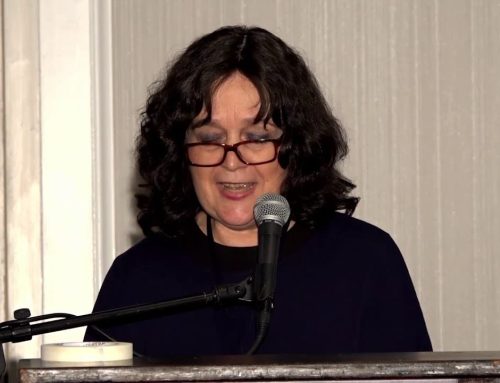
Mrs. Mushka Lew
Seventh and eighth grade American History teacher at Bnos Menachem Junior High.
Give us a glimpse into your classroom:
I often begin my classes by creating an environment that’s conducive to learning and engagement, by starting off with questions based on what I taught the day before. I only start teaching five or ten minutes into class, once the girls have finished their “Do Now” questions, and since we laid the groundwork for learning with focused questions in the first few minutes, they learn well for the rest of the period. My class is 75% frontal teaching, and I like to mix things up with partner work, videos, exploring primary sources, or discussions. We get into a lot of discussions because I also teach current events once a week.
What made you choose to become a teacher?
I did not always want to become a teacher, and I had even told myself that I would never become a teacher. But in my Seminary Bais year I tried many new opportunities, and at one point, the principal of Bnos Menachem Elementary asked me to consider being a maternity leave substitute for the fourth grade. I was already working from four to six pm, and attending Sem Bais in the morning. I thought that I would “maybe” consider it. She asked me again a week later, and I thought “why not?” The first week was very difficult, but I ended up figuring it out and I connected with the girls. Now those same students are in my eighth grade, and it’s been very cute to see how much they’ve grown. I entered the classroom for fun, loved it, and have been in it ever since.
What are your favorite teaching methods?
I use examples from Torah and current events when I teach because it makes it more relevant to the girls. When they understand how a president made a certain decision around the time when the Rebbe spoke about something, it’s very powerful. When we talk about slavery, current events with Eretz Yisroel, elections, or other topics that come up in history and current events, we approach it with Torah’s perspective, and it’s such a beautiful lens to have. I hope that the girls feel pride and gratitude that we have Hashem and Torah, so that when we learn about moral dilemmas in class, we have the answers from Torah that the people then didn’t necessarily have.
I’m also very into the girls understanding the ideas and concepts in history, more than just knowing dates and places. I always tell the girls that when history is learned as something from the past it can seem very black and white like an old story, but when you learn it as something happening now in the moment, it becomes much more nuanced and interesting. I tell them to think about how they are going to tell their grandchildren what they are currently going through – and how that is going to include many subliminal details.
What is something that you feel passionately about as a teacher?
I feel passionately about the girls tasting the success that comes from working hard. I want them to be able to use their brains a little more than they did yesterday. When a girl gives in her essay or test, I tell her that I don’t care what her mark is, but that she is handing in her best work. I believe in holding students to standards and expectations – not ones that are too high for them to reach – but ones that make them feel that they need to push themselves a little bit and taste the reward. I don’t care if they walk into my class or leave with the same opinion as when they came in, as long as they approach the class as an opportunity to think and be able to explain their opinions.
Tell us about an impactful teaching moment.
In my first full year of teaching I taught sixth grade English at Bais Chaya Mushka in Los Angeles. It was shortly after Covid and a series of substitutes and my students lacked classroom decorum. I spent the first month of school being firm and consistent about maintaining decorum. I told them that they couldn’t tilt their chairs back and try to balance like they enjoyed doing. It wasn’t to drive them crazy, but to teach about what was appropriate for class. We had a system where each girl would mark herself at the end of the week, and they got tickets. There was one very sweet girl, who just couldn’t stop balancing back on her chair and was very frustrated. But after one week of our system, she came to tell me that she only balanced on her chair once that whole week. She was very proud of herself to tell me that, and it was powerful to see how students feel when they push themselves a bit.
Tell us about your life outside of school.
Besides teaching I’m a wife and mother. I write songs, produce Kululams and direct choirs. People hire me to play guitar at their events and kumzitzs.
Who are your Chinuch role models?
My biggest Chinuch role model is my grandmother, Mrs. Bluma Rivkin, who is a teacher at Slater Torah Academy in New Orleans. She has been in Chinuch for over 50 years, and is still learning things about Chinuch. She will hear a new idea or read a book and her first reaction is “how do I incorporate this?” To her, Chinuch is a constantly changing and exciting process, and I find that very inspiring.
My other Chinuch role model is my own high school principal Mrs. Yehudis Farkash from Ohel Chana High School in LA. From the minute I walked into ninth grade until I graduated, I felt that she cared. It didn’t matter how many times she had to discipline, there was always this feeling of my principal caring about me.
What are the toughest parts of teaching?
One of the toughest parts is keeping the energy and momentum going for myself and my students. One of the solutions that works for me is to keep reminding myself that I’m human and that they’re human, and that a girl can have a bad day and there doesn’t have to be a reason for it – she just needs a little bit of grace and compassion. I also try to find moments to have a bit of fun in the classroom. I am lucky that I teach a subject that I feel passionately about, since I grew up in a home where my father was always listening to history podcasts and sharing his love for history, and I hope to give that over to the girls.
What do you find is the most rewarding?
I love seeing the girl’s brains turning, or when girls ask questions that show they are thinking ahead. I love when they debate with each other about their opinions. We’re learning about the
Revolutionary War in seventh grade, and it’s always funny to see who becomes a patriot and who becomes a loyalist. They argue with each other and it becomes a lot of fun!
What is a message that you’d like to share?
I love my students, I love my job, I love Bnos Menchem as a school and I feel very blessed to be able to do something that I love!